Skip to main content Skip to footer
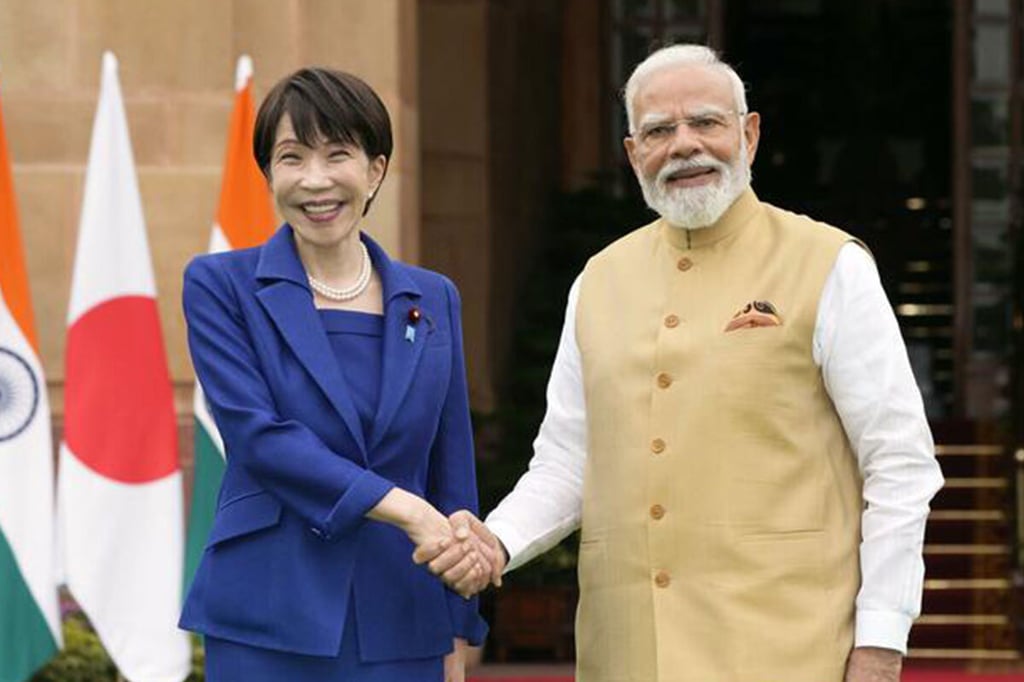
Tokyo said it was prepared to take decisive action against excessive currency movements Body will promote international AI cooperation, governance, safety and more equitable access to the technology The central bank signaled that further increases may follow as inflation and household debt risks persist The agreement expands goods, services and professional mobility across both markets. Despite the slowdown, China’s economy expanded 4.7 percent in the first half of the year, keeping growth broadly on track with Beijing’s annual target China’s monthly vehicle exports surpassed 1 million units for the first time in June The economy remains resilient despite global energy and external risks The company projected revenue to climb 129 percent year-on-year to 171 trillion won India and Japan agreed to deepen cooperation in areas including artificial intelligence, critical minerals, energy and defense South Korea has become only the fourth country globally to surpass $100 billion in monthly exports, alongside Germany, China and the United States China's trade surplus with the EU hit $411.95 billion in 2025, a 15 percent increase over 2024 Samsung Electronics and SK Hynix will jointly invest 800 trillion won to build two advanced semiconductor fabrication plants each Investment will expand AI and cloud infrastructure across Mumbai and Hyderabad SK Hynix shares have surged more than 340 percent so far this year, building on a strong rally in 2025 The move follows Washington's latest sanctions on several Chinese companies The central bank raised its short-term policy rate to 1 percent from 0.75 percent, pushing borrowing costs to their highest level since 1995 The reform directly addresses opposition and investor criticism regarding overly loose fiscal policies As part of a multi-year technology collaboration, SK Hynix will work with Nvidia to develop next-generation memory solutions for AI data centers worldwide Sharp decrease is largely attributed to aggressive efforts by Tokyo authorities to stabilize the yen Government caps aviation turbine fuel price at INR75.6 per litre for domestic flights South Korea’s semiconductor exports soared 169.4 percent year-on-year to a record $37.16 billion in May Nominal gross domestic product increases 0.8 percent during the three-month period The first three projects include an oil export facility in Texas, an industrial diamond plant and a natural gas-fired power plant Central bank keeps policy steady in 6–3 vote as market expected