
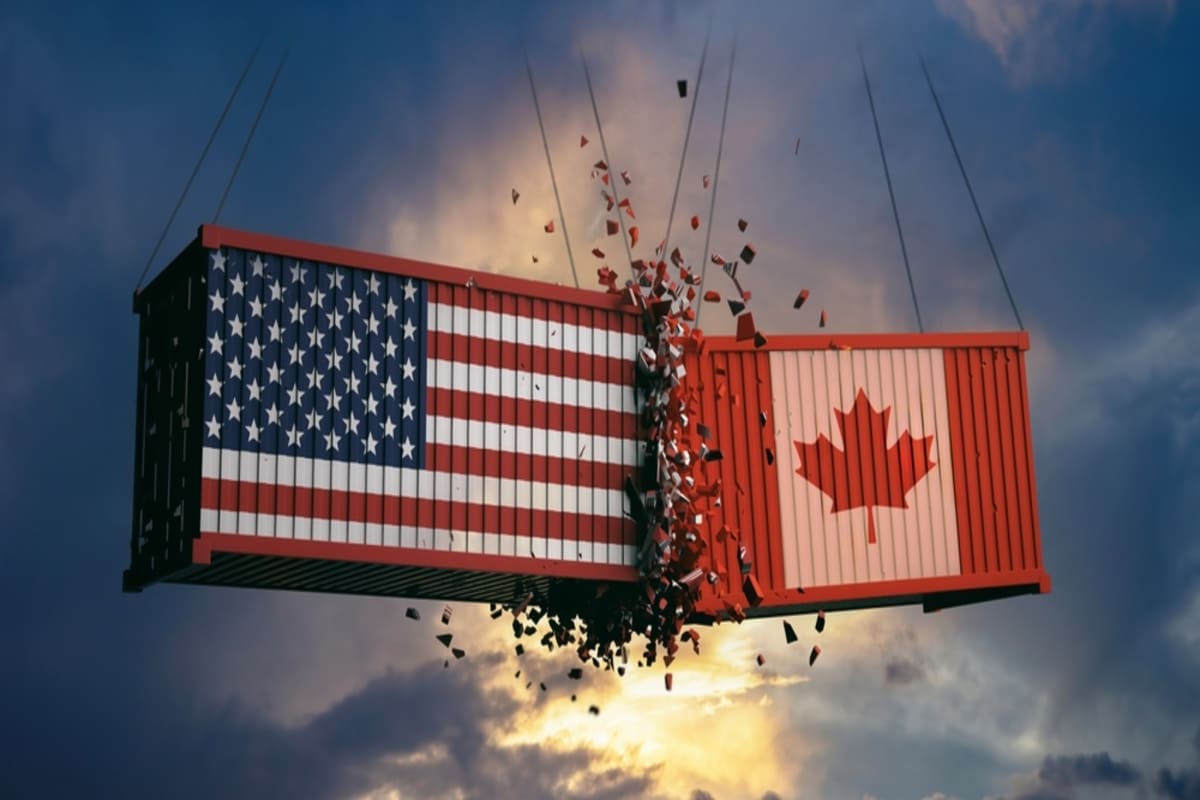
U.S. President Donald Trump has imposed additional 50 percent tariffs on selected Canadian goods, escalating trade pressure on one of the United States’ largest commercial partners.
The tariffs will take effect at 12:01 a.m. Eastern Time on August 19, 2026, 30 days after Trump signed three proclamations addressing Canadian measures affecting American automobiles, alcoholic beverages and dairy products.
According to the White House announcement, each proclamation applies an additional 50 percent tariff to a separate group of imports from Canada. The products covered range from wine and other goods to hockey sticks and cement.
The additional tariffs will apply to covered products regardless of whether they qualify for preferential treatment under the United States-Mexico-Canada Agreement, or USMCA.
However, the measures exclude energy, potash, products already subject to tariffs under Section 232 of the Trade Expansion Act and certain other goods, including fish and critical minerals.
Three sectors targeted
Trump invoked Section 338 of the Tariff Act of 1930, which authorizes the president to impose duties when another country discriminates against American commerce or places U.S. exporters at a disadvantage compared with exporters from other countries.
The White House said the measures were designed to offset disadvantages created by Canada’s treatment of American vehicles, alcoholic beverages and dairy products while restoring more reciprocal trade conditions.
The administration said Canada applies certain tariffs and quotas to vehicles imported from the United States that do not apply equally to automobiles arriving from some other countries. It also argued that the way Canada administers its vehicle quotas encourages U.S. automakers to invest in Canadian production rather than manufacturing in the United States.
Canadian imports of U.S. motor vehicles declined approximately 22 percent, or $5.6 billion, between April 2025 and March 2026 compared with the corresponding period a year earlier, according to figures cited by the White House.
The administration said exports from other countries increased to satisfy demand previously served by American automobile producers.
Alcohol exports tumble
The separate presidential proclamation covering alcoholic beverages said Canadian provinces and territories generally control the wholesale distribution of alcoholic drinks, while most operate a combination of public and private retail systems.
Canadian provinces and territories began halting purchases, distribution or retail sales of American alcoholic beverages in March 2025. Alberta and Saskatchewan subsequently lifted their restrictions in June 2025, but similar measures remained in place across most other jurisdictions.
Canadian imports of U.S. alcoholic beverages fell approximately 81 percent between March 2025 and February 2026 compared with the same period in 2024 and 2025. Their value dropped from about $718 million to approximately $137 million, representing a decline of around $582 million.
Over the same period, Canada’s alcoholic beverage imports from countries including Chile, Japan, Argentina, Ireland, New Zealand and Australia increased by between approximately 13 percent and 26 percent.
The proclamation said imports from countries other than the United States rose by more than $170 million, including an increase exceeding $100 million in shipments from the European Union, despite an overall decline in Canadian alcohol imports.
Dairy rules challenged
The third area covered by the measures is Canada’s dairy system. The White House said the country maintains tariff-rate quotas for American cheese that are more restrictive than those applied to comparable cheese imports from the European Union, even though Canada has trade agreements with both markets.
Under a tariff-rate quota, a specified quantity of a product can enter a market at a lower tariff, while shipments exceeding that threshold face a higher duty. The administration argues that Canada’s system limits the ability of American dairy producers to benefit fully from market access.
The tariffs introduced through the three proclamations are additional to other applicable duties, taxes, fees and charges, except where the official documents provide an exclusion.
Products already subject to duties under Section 232 will not also face the new Section 338 charges. Certain goods covered by the World Trade Organization Agreement on Trade in Civil Aircraft are also excluded, with specific treatment provided for unmanned aircraft.
The tariffs will remain in effect unless they are reduced, amended or terminated. U.S. Customs and Border Protection will oversee their implementation in coordination with the Treasury Department, Commerce Department and Office of the United States Trade Representative.
Read more: Canada’s unexpected inflation surge dampens hopes of July rate cut
Wider tariff strategy
The latest action adds another layer to the Trump administration’s broader use of tariffs as an economic and trade policy tool. The White House said previous Section 232 measures had targeted steel, aluminum, copper, automobiles, trucks, timber, lumber and pharmaceuticals.
It also said the United States had declined to renew the USMCA in its existing form because the administration did not consider the agreement sufficiently beneficial to the country.
The White House stated that tariffs and negotiations with international partners had produced 18 trade agreements intended to improve market access for American exports and promote more reciprocal commercial relationships.
It also pointed to domestic manufacturing performance, saying the sector expanded in June 2026 for a sixth consecutive month after recording its fastest growth in four years during May.
The administration maintained that the new Canadian tariffs would protect American workers, farmers and businesses, encourage production in the United States and pressure Canada to remove measures it considers discriminatory.
Trade relationship at stake
The measures affect a deeply integrated trading relationship. U.S. Trade Representative data show that bilateral goods trade totaled an estimated $719.5 billion in 2025.
U.S. goods exports to Canada reached $336.5 billion during the year, while imports totaled $383 billion, producing an American goods deficit of approximately $46.4 billion. Canada has consistently ranked among the United States’ two largest trading partners and remains a leading market for American exports.
Vehicles, machinery, energy and agricultural products are among the principal American exports to Canada. Canadian exports to the United States are similarly concentrated in energy, vehicles, agricultural products and other goods moving through highly integrated North American supply chains.
More recent U.S. Census Bureau figures show that American exports to Canada totaled $144.52 billion between January and May 2026. Imports reached $162.96 billion, leaving the United States with a goods trade deficit of approximately $18.44 billion.
The scale of bilateral commerce means changes in tariff treatment can affect manufacturers, distributors, retailers and consumers on both sides of the border, particularly in industries whose supply chains cross the boundary several times before a finished product reaches the market.
Canada maintains countermeasures
Canada had previously introduced tariffs in response to earlier U.S. trade measures. According to the Canadian government’s tariff summary, Ottawa removed counter-tariffs on most American imports in September 2025 while retaining measures covering steel, aluminum and automobiles.
Canada continues to impose 25 percent tariffs on vehicles imported from the United States that do not comply with the Canada-United States-Mexico Agreement. The tariff also applies to the non-Canadian and non-Mexican content of qualifying American vehicles.
The Canadian government has described those automobile duties as a response to U.S. tariffs introduced against its automotive industry in April 2025. It has argued that tariffs increase costs for consumers and businesses, threaten employment and weaken the competitiveness of interconnected North American supply chains.
The new American measures are scheduled to enter into force as both countries manage unresolved disputes involving vehicles, metals, agricultural market access and provincial purchasing restrictions. Their effect will depend on the precise products listed in the tariff schedules, subsequent customs guidance and whether negotiations produce changes before August 19.
For more news on banking & finance, click here.