
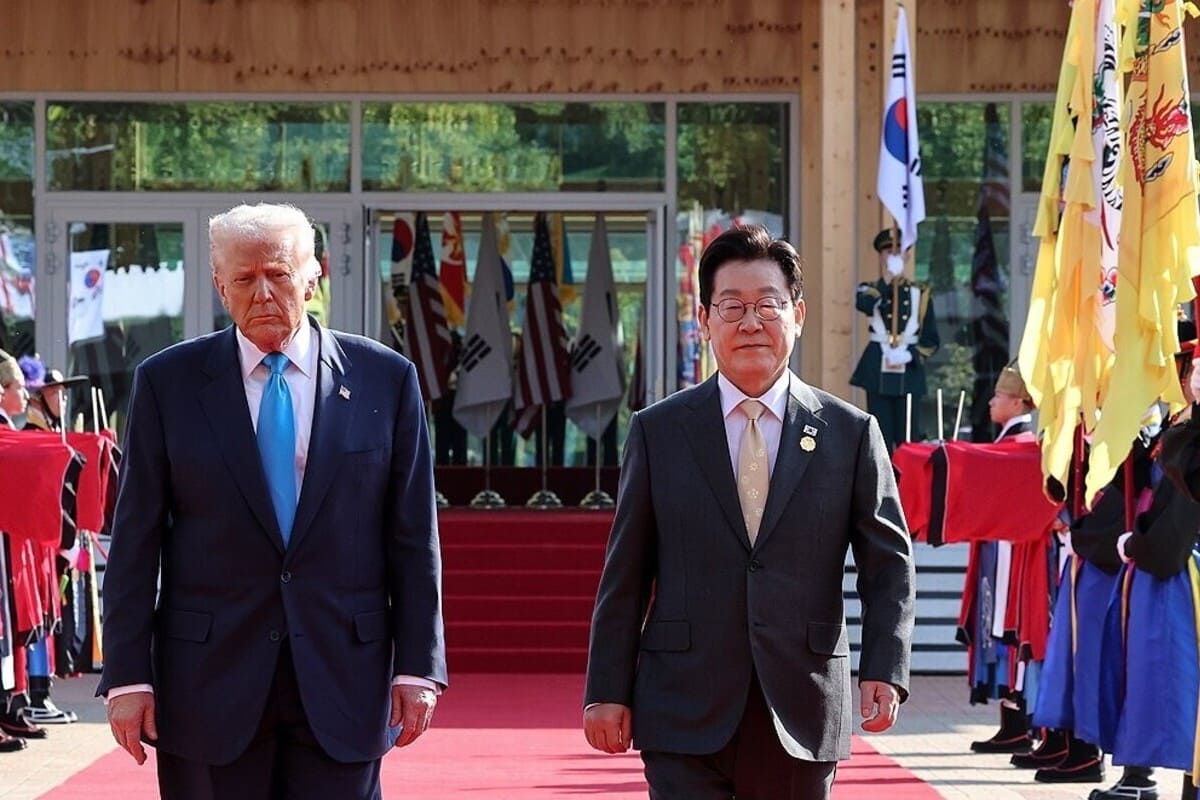
U.S. President Donald Trump has announced a plan to elevate tariffs on South Korean imports to 25 percent, a move he justified by accusing Seoul of “not living up” to a trade agreement finalized last year.
In a social media statement, President Trump detailed that levies on South Korean products would rise from their current 15 percent across several categories, including automobiles, pharmaceuticals, lumber, and “all other Reciprocal TARIFFS.” The President asserted that while Washington had “acted swiftly to reduce our TARIFFS in line with the Transaction agreed to,” South Korean legislators have been dilatory in their approval of the accord.
South Korea’s diplomatic and economic response
Seoul stated it had received no formal notification regarding the decision to increase duties and has requested urgent consultations with Washington. In response to the development, South Korea’s Industry Minister, Kim Jung-kwan—who is presently in Canada—is scheduled to travel to Washington at the earliest opportunity to meet with U.S. Commerce Secretary Howard Lutnick.
The economic stakes are significant: South Korea exported approximately $123 billion (GBP90 billion) in goods to the U.S. last year, its second-largest market after China. Automotive exports alone accounted for roughly $30 billion of that total.
Initially, the announcement triggered a sharp sell-off in Korean automotive stocks, with Hyundai and Kia falling by as much as 6 percent. However, shares rebounded to close only 1 percent lower. Similarly, the benchmark Kospi index overcame early losses to finish the trading day up 2.7 percent.
Read more: U.S. trade deficit plummets 39 percent to below $30 billion as Trump tariffs curb imports
Market skepticism and “carrot and stick” approach
Market analysts observed that many investors are skeptical as to whether the tariff hike will actually be implemented. They pointed to President Trump’s recent reversal on a proposal to levy additional tariffs on European partners following opposition to U.S. interests in Greenland.
“With a delegation on its way from Seoul to Washington, markets are viewing this latest twist as more carrot than stick,” said Derren Nathan, head of equity research at Hargreaves Lansdown.
Background on Oct. 2025 deal
The current friction stems from a deal reached last October, which featured a pledge from South Korea to invest $350 billion (GBP256 billion) in the U.S., including a focus on the shipbuilding sector. A month later, both nations agreed that the U.S. would lower tariffs on specific goods once South Korea initiated the domestic approval process.
The agreement was formally submitted to South Korea’s National Assembly on November 26 and is currently under review. Local media suggests the measure will likely pass in February.
Tariffs as tool of foreign policy
TTariffs are taxes paid by importing companies, meaning that in this scenario, U.S. firms would incur a 25 percent cost on goods purchased from South Korean suppliers. Throughout his second term, President Trump has frequently utilized such measures as leverage in foreign policy negotiations. For instance, on Saturday, he threatened Canada with a 100 percent tariff if it were to enter into a trade agreement with China. In response to these developments, Chinese officials maintained on Monday that their “strategic partnership” with Canada is not intended to undermine other nations. Meanwhile, Prime Minister Mark Carney emphasized that Canada is “never” considering a free trade deal with China and has clearly communicated this position to Washington.
Prior to these events, the President also threatened import taxes against eight nations, including the U.K., for opposing U.S. proposals regarding Greenland—an autonomous Danish territory and NATO member. While he eventually rescinded those threats citing progress toward a “future deal,” the incident notably strained relations with Denmark and other NATO allies.
For more news on banking & finance, click here.