
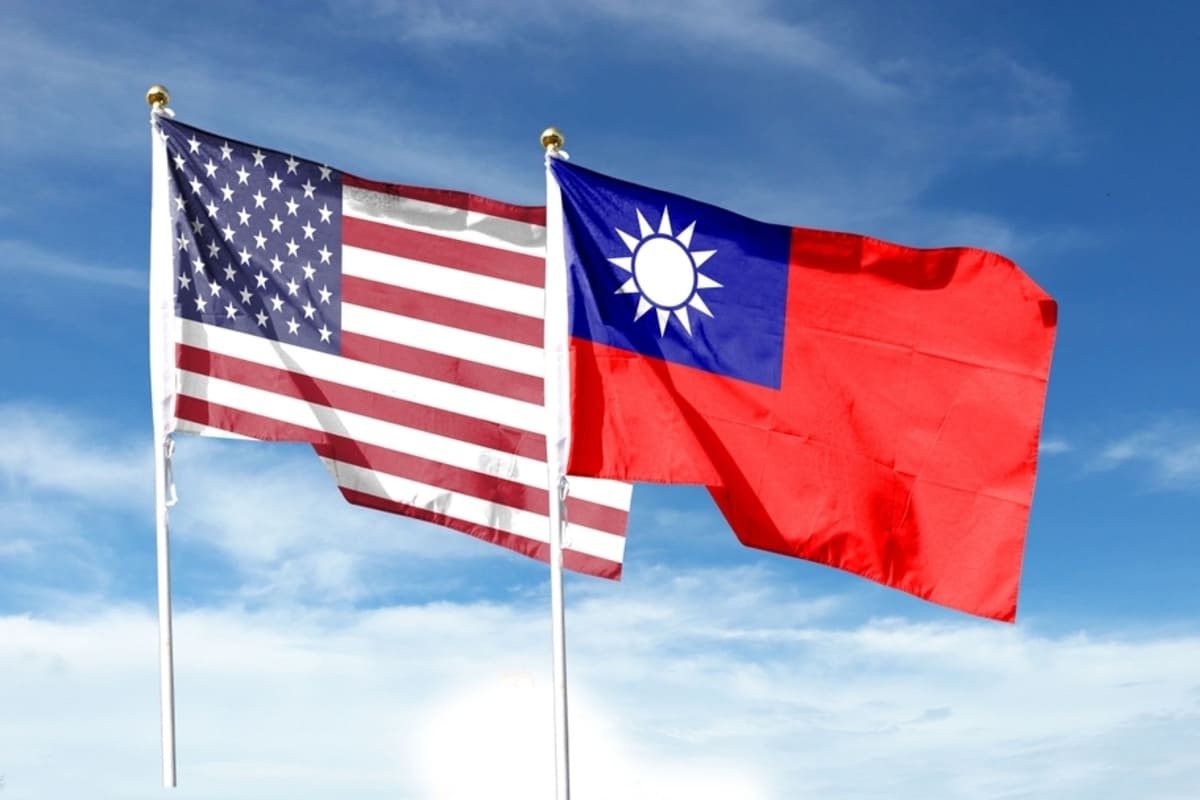
Trump administration has finalized a reciprocal trade agreement with Taiwan, solidifying a 15 percent U.S. tariff rate on Taiwanese imports. In exchange, Taiwan has committed to a specific timeline for reducing or completely removing tariffs on nearly all goods imported from the United States. This document, published by the U.S. Trade Representative’s office, formalizes a framework established in January that lowered duties from an initial 20 percent to the current 15 percent, placing Taiwan on a level playing field with regional competitors like Japan and South Korea.
Major purchase commitments through 2029
A significant component of the deal involves Taiwan substantially increasing its acquisition of American products between 2025 and 2029. These commitments include $44.4 billion for crude oil and liquefied natural gas, $15.2 billion for civil aircraft and engines, and $25.2 billion for generators, power grid equipment, steelmaking machinery, and marine equipment. According to Taiwan President Lai Ching-te, the agreement will also exempt more than 2,000 Taiwanese export items from reciprocal tariffs, effectively reducing the average tariff on these goods to 12.33 percent.
Strategic high-tech partnership
President Lai characterized the agreement as a “pivotal moment” that will establish a high-tech strategic partnership and build more resilient industrial supply chains. While the final text did not elaborate on specific new figures, it builds upon a January pledge for Taiwanese firms to invest $250 billion in the U.S. for semiconductors, artificial intelligence, and energy. This includes a $100 billion commitment already made by Taiwan Semiconductor Manufacturing Corp (TSMC). Commerce Secretary Howard Lutnick noted that the Taiwanese government would also guarantee an additional $250 billion in U.S. investments.
Agricultural and industrial market access
The agreement provides immediate benefits for U.S. agriculture by eliminating Taiwanese tariffs of up to 26 percent on products such as corn, dairy, and beef. However, some specific items like ham and pork belly will see more gradual reductions, falling from 32 percent and 40 percent respectively to a floor of 10 percent. Additionally, Taiwan has agreed to remove non-tariff barriers for motor vehicles and will begin accepting U.S. safety standards for automobiles, pharmaceuticals, and medical devices. U.S. Trade Representative Jamieson Greer emphasized that these measures will broaden opportunities for American manufacturers, farmers, and ranchers.
Rising deficits, AI demand
Despite the new deal, U.S. Census Bureau data shows the U.S. trade deficit with Taiwan grew significantly in the first 11 months of 2025, reaching $126.9 billion compared to $73.7 billion for the entirety of 2024. This spike is largely attributed to the heavy demand for high-end AI chips produced in Taiwan. Moving forward, the agreement requires formal approval from Taiwan’s parliament, where the opposition party currently holds a majority.
This finalization follows a historic year where Taiwan became the United States’ fourth-largest trading partner, with bilateral trade surplus reaching $150.1 billion in 2025 due to the global AI boom. To support the transition, Taiwan’s Ministry of Economic Affairs announced on February 10, 2026, a NT$30 billion New Taiwan dollars (NT$) subsidy package to help local automakers modernize as U.S. vehicle import caps are lifted. A critical incentive for Taiwanese tech giants is a “Section 232” exemption provision: companies like TSMC that build chip plants in America will be allowed to import up to 2.5 times their planned U.S. capacity tariff-free during the construction period.