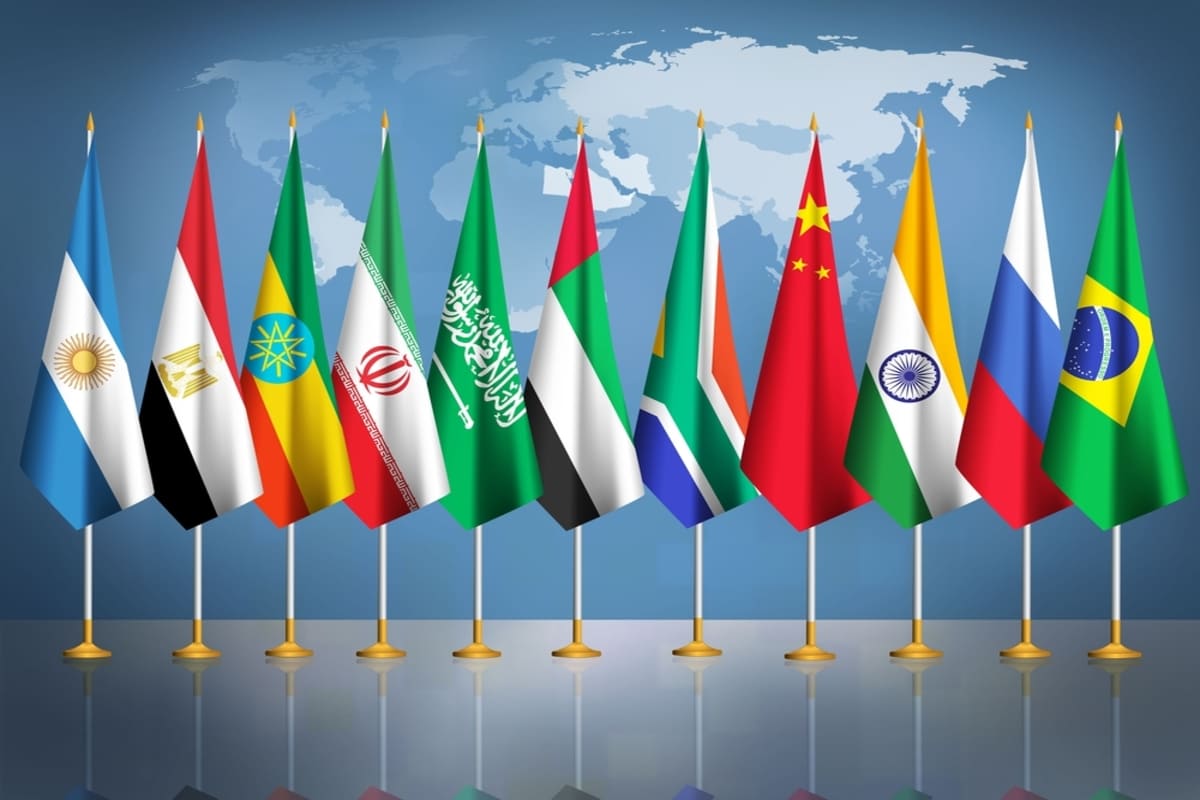
The BRICS group has solidified its position as a central force in the modern economic landscape, reflecting a broader shift toward emerging and developing nations. Russian President Vladimir Putin affirmed that the BRICS group has become one of the most prominent drivers of global economic growth amid the increasing role of emerging economies and developing countries. The impact of these nations on the global economy is measurable and expanding. Over the past five years, BRICS countries have generated nearly half of the annual growth in global gross domestic product (GDP). At present, BRICS accounts for approximately 40 percent of global GDP measured by purchasing power parity. Ultimately, nearly half of the annual increase in global GDP—49 percent—was generated by BRICS countries.
President Putin highlighted that businesses are increasingly targeting dynamic markets with high growth prospects, prompting a structural evolution in global trade and finance. Key indicators of this transition include the share of global merchandise trade held by BRICS member states more than doubling since the group’s inception. Furthermore, member states now account for almost a quarter of global exports, a figure that continues to grow steadily. Reflecting this deep integration, intra-BRICS trade turnover has already exceeded $1 trillion.
Read more: Malaysia applies to join BRICS, strengthening bilateral relations with Russia
Expanding high-tech exports
Technological development and the empowerment of emerging populations are becoming the foundations of this new economic order. BRICS countries have significantly increased high-tech exports. Specifically, our strategic partner China holds the largest number of patents in the field of artificial intelligence, where Russia also has very strong prospects.
Looking forward, the President emphasized the necessity of a more inclusive global economy, noting that the structure of growth is shifting in favour of the development centres of the Global South, which are experiencing population growth, the emergence of a middle class, and the expansion of domestic markets. He underscored that the world becomes fairer when economic growth embraces billions of people who were previously on the periphery of the global economy. Ultimately, he highlighted that it is very important that the new centres of growth want to determine their own development trajectories.
For more news on the economy, click here.