
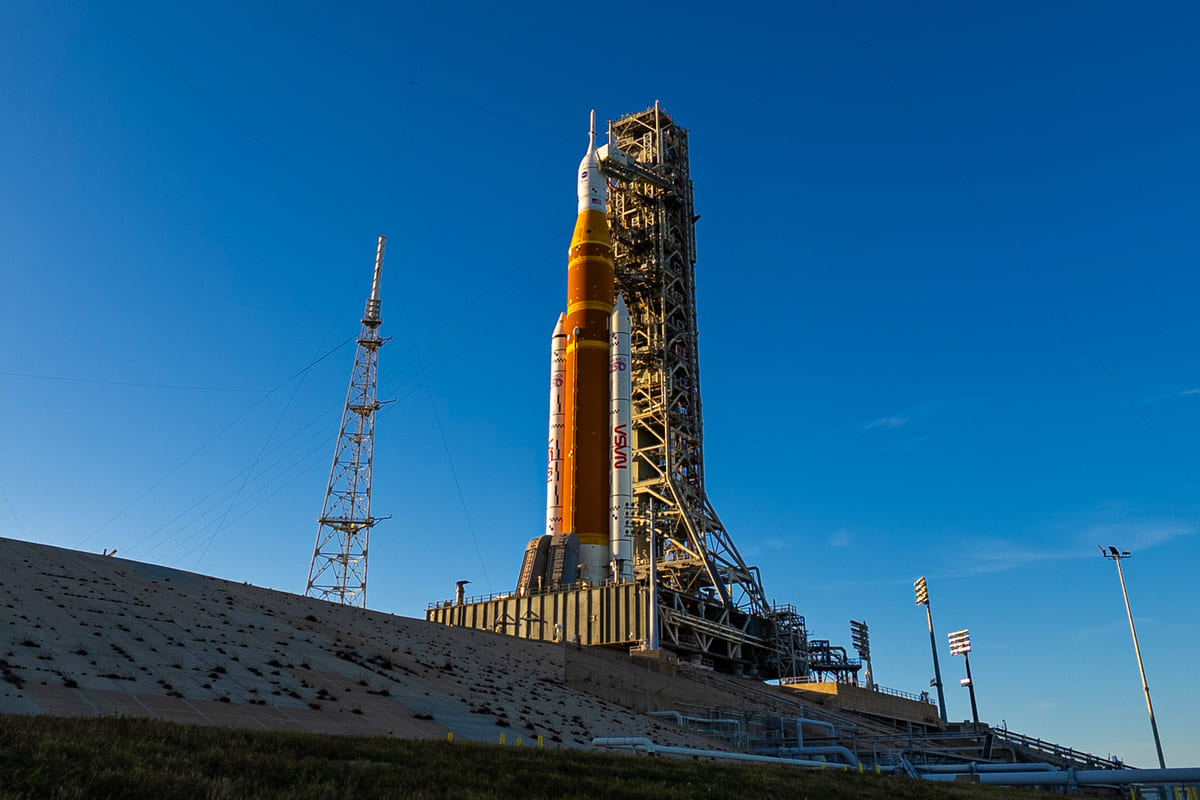
NASA’s Artemis II mission reached a pivotal milestone as engineers at the Kennedy Space Center successfully completed a critical fueling test known as a “wet dress rehearsal.” The 322-foot Space Launch System (SLS) rocket was loaded with more than 700,000 gallons of supercold liquid hydrogen and oxygen, a process that spanned nearly 50 hours and culminated in a simulated countdown stopping at T-minus 29 seconds. This success follows months of technical hurdles and earlier setbacks, including a failed rehearsal in early February caused by a persistent hydrogen leak. According to NASA, the minimal leakage observed during this latest test remained well within safety limits, providing a significant boost of confidence for the upcoming mission.
Final preparations and crew readiness
The Artemis II crew, consisting of Commander Gregory Reid Wiseman, Pilot Victor Glover, Mission Specialist Christina Koch, and Canadian Space Agency astronaut Jeremy Hansen, is now moving into the final stages of preparation. Following the successful rehearsal, the four astronauts are scheduled to enter a standard two-week medical quarantine starting Friday, February 20, 2026, to protect their health ahead of the flight. Three of the crew members were present at the Launch Control Center to monitor the proceedings, underscoring the close collaboration between the astronauts and the ground teams. While a formal launch date has not yet been finalized, the successful test keeps a launch window as early as March 6, 2026, firmly on the table.
Safety first under new leadership
NASA’s new administrator, Jared Isaacman, who assumed office in December 2025, has placed an uncompromising emphasis on safety as the agency prepares for its first crewed lunar mission in over half a century. Isaacman recently reiterated that the mission will not launch until all systems are verified, citing lessons learned from recent challenges in other programs, such as Boeing’s Starliner. Looking beyond Artemis II, Isaacman has already announced plans to redesign fuel connections for the Artemis III mission, which is currently slated for no earlier than mid-2027. This proactive approach aims to solve the recurring hydrogen leak issues that have impacted the SLS platform since its inception.
A new era of lunar exploration
The 10-day Artemis II mission is designed to take the crew on an ambitious figure-eight journey around the moon, reaching distances farther from Earth than any human has ever traveled. While the mission will not include a lunar landing, it serves as the essential precursor to returning humans to the lunar surface. The program’s success is also a major driver for the commercial space sector, with companies like Blue Origin and L3Harris providing critical hardware for the Orion spacecraft and future landers. As the world watches the Kennedy Space Center, this week’s successful rehearsal signals that humanity is closer than ever to beginning a new chapter of deep-space exploration.