
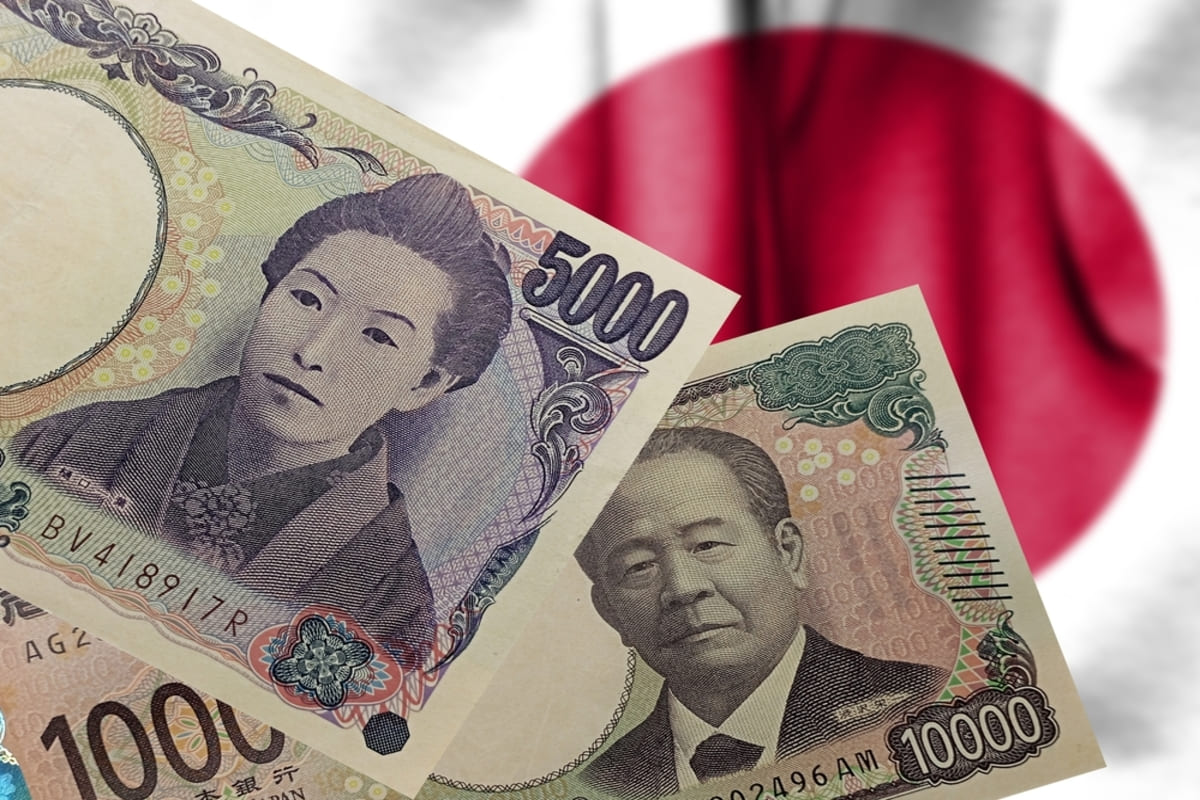
The Japanese yen fell to its weakest level in nearly four decades on Wednesday, prompting Japan’s government to signal that it was prepared to intervene in the foreign exchange market if excessive currency movements continued.
The yen reached 163.00 against the U.S. dollar during New York trading, its weakest level since late 1986. The Bank of Japan announced that it could raise interest rates faster than markets expected.
The dollar later traded lower as intervention concerns and a potentially more aggressive Bank of Japan policy outlook provided temporary support for the Japanese currency.
Finance Minister Satsuki Katayama said the government’s position on excessive exchange-rate movements had not changed.
“Our stance has not changed at all. If there is a need for it, we will take decisive action appropriately at any time,” Katayama told reporters.
Tokyo raises warning
Chief Cabinet Secretary Minoru Kihara reinforced the warning, saying the government was prepared to respond appropriately at any time. The comments reflected growing official concern about the economic consequences of the yen’s sustained depreciation.
A weaker currency raises the cost of imported goods, including fuel, food and industrial raw materials. This is particularly important for Japan because the country depends heavily on overseas energy supplies.
Markets are watching statements from Japan’s senior officials for indications that authorities could purchase yen directly. Atsushi Mimura, Japan’s top currency diplomat, did not issue an official comment when approached by reporters at the finance ministry on Wednesday.
Previous verbal warnings have done little to reverse the yen’s broader decline. Analysts have attributed the currency’s weakness to widespread U.S. dollar strength, Japan’s comparatively low interest rates and uncertainty about the government’s influence over monetary policy.
Tokyo intervened in April and May after the yen weakened beyond 160 per dollar, but the operations provided only temporary support.
Read more: Japan’s wholesale inflation surges to 11-month high as weak yen bites
Dollar strength persists
The yen’s decline beyond 163 followed renewed attacks in the Middle East, which pushed oil prices higher and revived concerns about inflation in the United States.
Higher inflation could encourage the U.S. Federal Reserve to resume raising interest rates. Such a move would widen the rate differential between the United States and Japan, increasing the relative appeal of dollar-denominated assets.
Brent crude reached a six-week high of $94.76 per barrel on Wednesday. Rising energy prices are especially damaging for the yen because Japan imports most of the oil and gas it consumes, increasing the country’s demand for foreign currency when commodity costs climb.
The U.S. dollar index, which measures the currency against six major counterparts, stood around 101.14 after slipping 0.04 percent.
Softer U.S. inflation data reduced the urgency for additional Federal Reserve tightening, limiting the dollar’s advance. However, geopolitical uncertainty, elevated Treasury yields and demand for safe-haven assets continued to support the U.S. currency.
Policy concerns weigh
Prime Minister Sanae Takaichi’s economic agenda has added to the pressure on the yen. Her administration is perceived as favoring lower borrowing costs and accommodative financial conditions to support investment and economic growth.
The government’s economic blueprint retained language calling for the Bank of Japan to coordinate its policies with the administration. That fueled concerns among some investors that political pressure could delay further interest-rate increases.
Takahide Kiuchi, executive economist at Nomura Research Institute, said Middle East developments may have provided the immediate trigger for the yen’s fall beyond 163. However, he identified concerns about Japan’s fiscal policy and possible government involvement in monetary policy as additional sources of weakness.
If investors believe the Bank of Japan could fall behind inflation by keeping interest rates too low, the yen may remain under pressure even when authorities intervene directly in the currency market.
Bank of America strategists said earlier in July that they had encountered no investors expressing a bullish view on the yen during their midyear meetings.
BOJ outlook shifts
The Bank of Japan raised its policy interest rate to 1 percent in June, its highest level in 31 years, as increasing energy prices, a weak yen and tight labor conditions intensified inflationary pressure.
Despite the increase, Japanese interest rates remain considerably below those in the United States and other major economies. That difference encourages carry trades in which investors borrow relatively inexpensive yen and invest in currencies or assets offering higher returns.
A Reuters poll conducted before the June increase showed that many economists expected the Bank of Japan to raise its policy rate to 1.25 percent by the end of 2026.
Expectations changed further on Wednesday after reports suggested that some Bank of Japan officials were open to accelerating the pace of monetary tightening.
Sources familiar with the central bank’s thinking said the timing of increases could not be determined in advance and would depend on economic and price conditions.
Faster hikes possible
Some policymakers see scope to increase rates more rapidly than the market’s prevailing expectation of two moves annually if the weak yen and higher fuel costs cause inflation to accelerate more than forecast.
The report pushed the yen and Japanese government bond yields higher as traders reassessed the probability of an earlier rate increase.
The Bank of Japan currently guides the uncollateralized overnight call rate at approximately 1 percent. Its next monetary policy meeting is scheduled for July 30 and 31.
The central bank has indicated that it will continue adjusting the degree of monetary accommodation if economic activity and prices develop in line with its forecasts. However, it must balance currency and inflation risks against the possibility that higher borrowing costs could weaken household consumption, business investment and economic growth.
The Bank of Japan’s credibility has consequently become increasingly important to the yen’s performance. Direct market intervention may slow rapid depreciation, but expectations for monetary policy are more likely to determine the currency’s longer-term direction.
Intervention offers relief
Japan’s Ministry of Finance is responsible for deciding whether to intervene in the foreign exchange market, while the Bank of Japan executes transactions on the ministry’s behalf.
Authorities generally avoid targeting a specific exchange rate and instead describe their objective as limiting excessive or disorderly currency movements. This distinction allows officials to respond to volatility without publicly identifying a preferred level for the yen.
Japan has historically intervened by selling dollars from its foreign reserves and purchasing yen. Such operations can produce sharp short-term movements, particularly when trading liquidity is limited or investors hold substantial positions against the currency.
However, intervention is less effective when it conflicts with underlying monetary conditions. If U.S. rates remain considerably higher than Japanese rates, investors retain a financial incentive to favor the dollar.
Fabien Yip, a market analyst at IG, described intervention as a mechanism that can buy time rather than permanently reverse the trend. Without a meaningful change in Bank of Japan policy, official action may function primarily as a temporary circuit breaker.

Import costs rise
The weak yen has mixed consequences for Japan’s economy. It increases the overseas value of earnings generated by Japanese exporters when those profits are converted into yen, potentially supporting manufacturers and equity prices.
At the same time, depreciation makes imported energy, food and materials more expensive. Those higher costs can reduce household purchasing power and squeeze companies that cannot pass their expenses on to customers.
The latest pressure is particularly significant because the Middle East conflict has raised the prices of oil, refined fuels and shipping. Japan’s dependence on imported energy means the exchange rate can amplify the domestic effect of global commodity shocks.
The Bank of Japan’s daily foreign exchange data provide official reference rates and a record of recent yen movements. The data have shown the currency weakening progressively during July as oil prices and U.S. yields increased.
A prolonged move beyond 163 could therefore intensify both inflation risks and political pressure for another intervention.
Markets await action
Traders will watch Mimura and other finance ministry officials for changes in language that could indicate intervention is approaching. Historically, warnings have tended to escalate from concern about rapid movements to statements that authorities are examining markets with a strong sense of urgency.
Investors will also focus on the Bank of Japan’s July meeting for evidence that policymakers are becoming more concerned about the inflationary effects of currency depreciation.
A faster series of rate increases could support the yen by narrowing the yield difference with the United States. However, any indication that political priorities are restricting the central bank’s independence could produce the opposite reaction.
For now, the yen remains caught between the threat of government intervention and economic forces favoring the dollar. Tokyo has made clear that it is prepared to act, but reversing the currency’s long-term weakness may ultimately require a convincing shift in Japan’s interest-rate outlook.
For more news on markets, click here.