
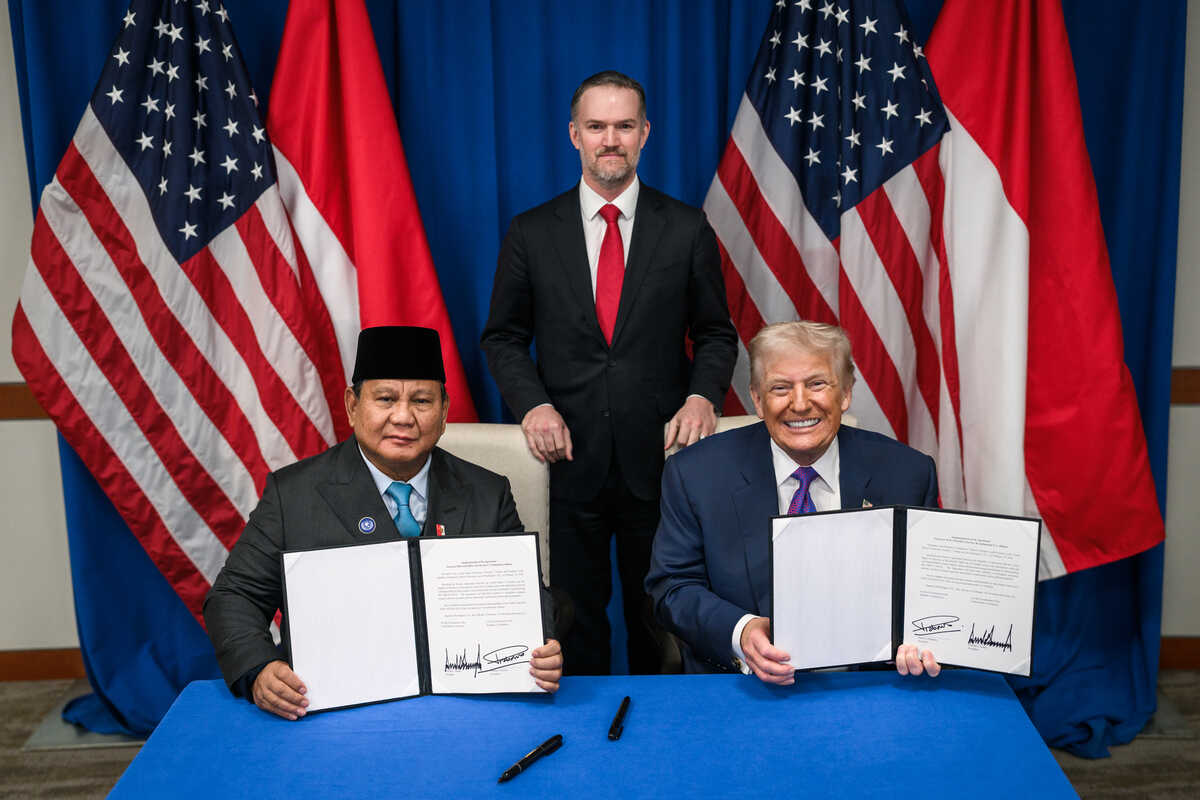
Indonesia and the United States have concluded a trade deal that will reduce U.S. tariffs on Indonesian goods to 19 percent from 32 percent. As part of the deal, Jakarta secured exemptions for its key export, palm oil, along with several other commodities.
The deal was signed in Washington by Indonesia’s senior economic minister, Airlangga Hartarto, and U.S. Trade Representative Jamieson Greer following months of negotiations.
Indonesia includes crucial exemptions
Palm oil secured a crucial exemption under the agreement, accounting for roughly 9 percent of Indonesia’s total exports. Hartarto added that Indonesian coffee, cocoa, rubber and spices will also enter the United States tariff-free.
The revised 19 percent tariff rate aligns Indonesia with other Southeast Asian economies that have reached similar deals with Washington, including Malaysia, Cambodia, Thailand and the Philippines. On the other hand, Vietnam faces a slightly higher rate of 20 percent.
Malaysia, another leading palm oil exporter, has also obtained exemptions for palm oil, as well as cocoa and rubber.
Under the trade deal, Indonesian textile exports will face no tariffs under a quota system that is still being finalized. The quota will be based on the volume of U.S.-sourced inputs such as cotton and synthetic fibers used in the production of those textiles.
Hartarto said the U.S. also withdrew requests to include non-economic provisions in the trade deal with Indonesia, including issues tied to nuclear reactor development and the South China Sea. In exchange, Indonesia will eliminate tariffs on most U.S. goods across sectors and address a range of non-tariff barriers, including local content requirements, according to a White House fact sheet.
Jakarta will also adopt U.S. product standards covering vehicle safety and emissions, as well as medical devices and pharmaceuticals.
Read: Indonesia, U.S. companies ink $38.4 billion trade and investment deals
Deal to come into force in 90 days
As part of the trade deal with the U.S., Indonesia will impose limits on so-called “excess production” by foreign-owned mineral processing facilities, ensuring output aligns with national mining quotas. The affected minerals include nickel, cobalt, bauxite, copper and manganese.
Jakarta has also committed to acting against foreign-owned or foreign-controlled companies operating within its jurisdiction if their activities are deemed harmful to U.S. trade interests. In addition, Indonesia will support greater U.S. investment in critical minerals and energy resources, while working with American firms to accelerate the development of its rare-earth industry.
According to Hartarto, the agreement will come into force 90 days after both sides complete the necessary legal procedures, although amendments remain possible by mutual consent.
For more news on logistics, click here.