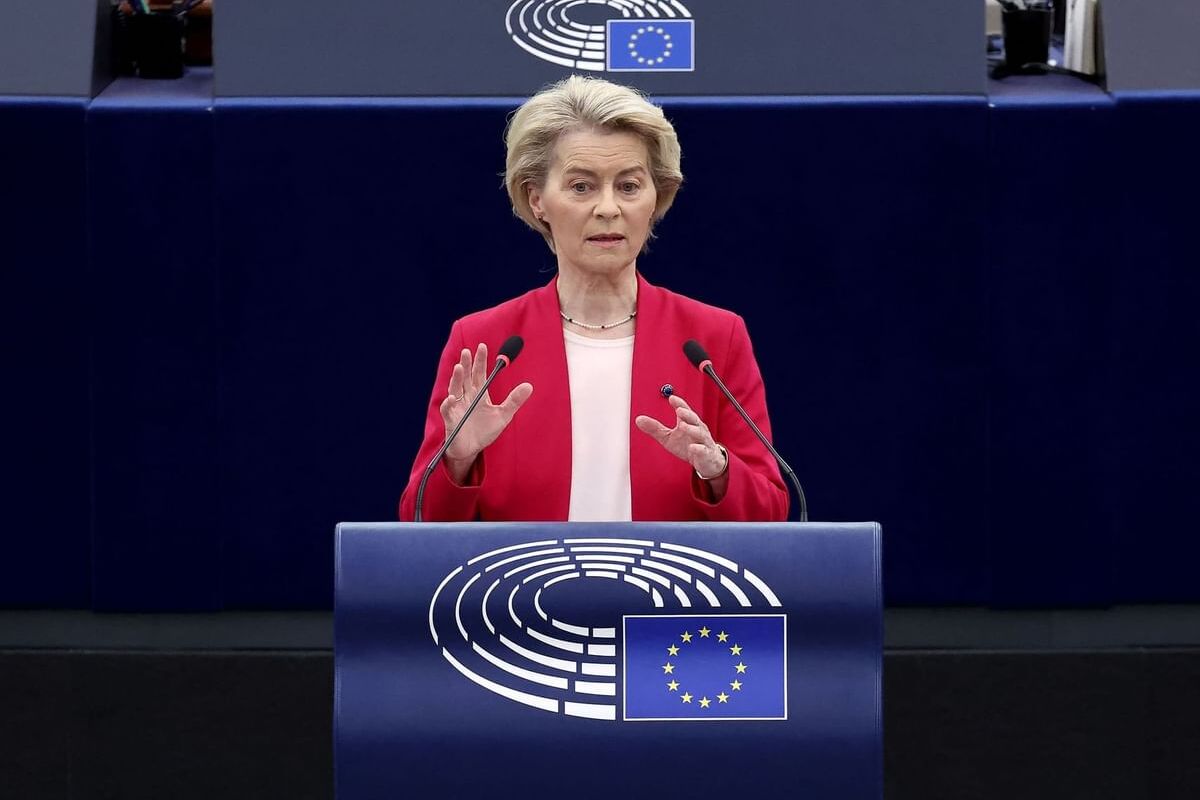
The European Commission has disclosed that the EU’s bill for fossil fuel imports has grown by more than EUR22 billion ($25.9 billion) since the start of the Middle East conflict, 44 days ago.
“This shows the enormous impact this crisis has on our economy,” said President of the European Commission Ursula von der Leyen in a statement following an extraordinary meeting held to discuss the economic impact of the situation in the Middle East on the European Union.
Proposes fast energy support
“Therefore, we also discussed a series of measures that we will present to leaders at the next informal EU Council (EUCO) in Cyprus next week. We will have a communication the Wednesday before the EUCO starts in Cyprus. And today, we discussed a number of measures that we could present,” von der Leyen added.
“First and foremost,” she said, “it is important that we have robust coordination among the Member States. We are also looking into EU‑wide coordination of Member States’ gas storage filling, to avoid a situation where many Member States enter the market at the same time and compete against each other. We will also coordinate oil stock releases to achieve the maximum possible effect from these releases. And we will ensure that Member States’ emergency measures do not undermine the integrity of the Single Market. That is the ‘coordination’ part.”
The measures, she emphasized, should be targeted at vulnerable groups, implemented in a timely manner—they must be fast, not in a year but immediately—and temporary, applied only for a short period. If they are codified into law, clear mechanisms must be built in so that the measures can be wound down in a timely way.
EU pushes electrification and aid flexibility
“We will discuss with the Member States and present some typical best practices on how to design income‑support schemes. This will all be included in the communication that we will present next week. And already this week, we will consult Member States on more flexible State aid rules—which is an important tool as well—to give national governments more room for temporary State aid support in the most exposed sectors,” von der Leyen said.
“We have made progress in expanding both renewables and nuclear power in Europe—they now together account for more than 70 percent of our electricity generation. But of course, we need to go much further. And these clean energy sources need better integration into the energy system,” she noted.
At present, she added, large volumes of clean electricity remain unused or even go to waste. What is needed, she said, are more storage and flexibility options, along with accelerated grid connections. To improve the overall situation, the Commission has already presented the Grids package in December.
“We also need to accelerate the electrification of our economy—in our industrial operations, in how we heat our homes, and in our mobility. In other words: electrifying Europe means making Europe more independent. But at the moment, we are lagging on electrification, behind both China and the United States. So we will present our electrification strategy before the summer as well,” she concluded.
For more news on energy, click here.