
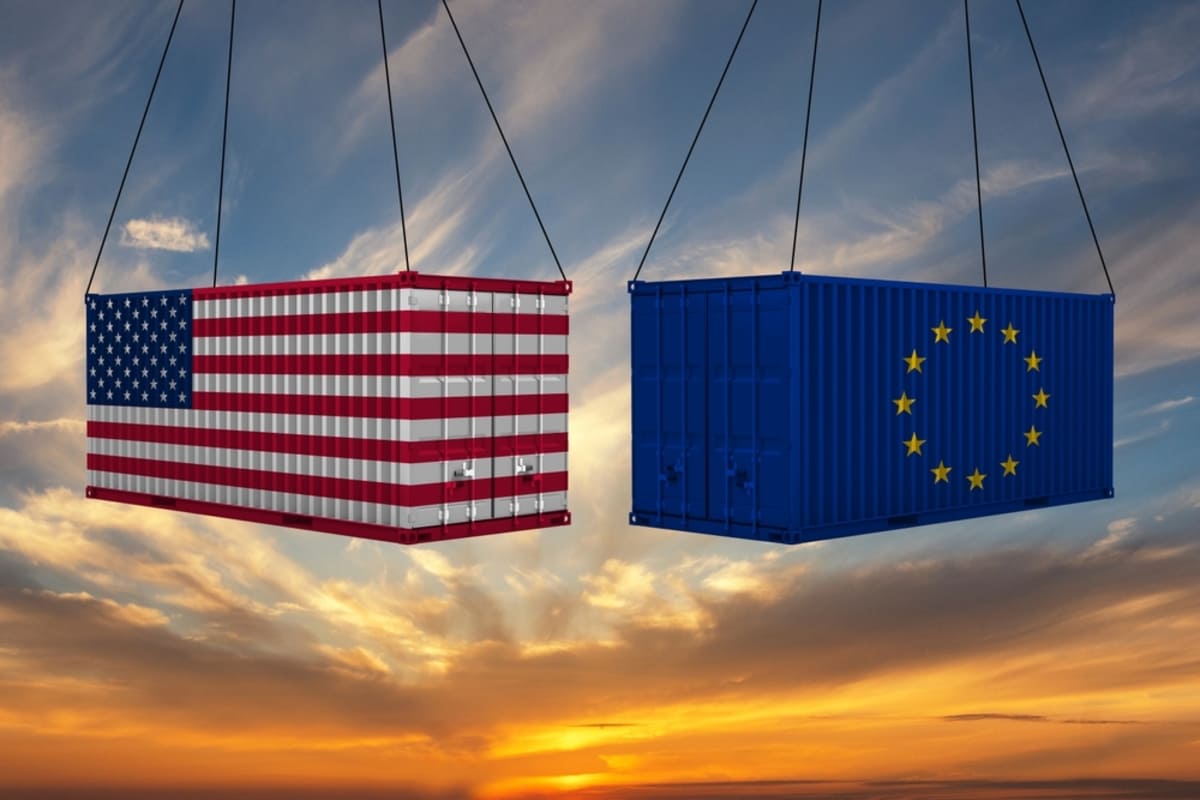
European Union governments have formally approved legislation eliminating import duties on a range of U.S. goods, completing the bloc’s implementation of a trade agreement reached with U.S. President Donald Trump last year and helping avert the risk of a renewed transatlantic trade dispute.
The decision, Reuters reported, follows approval by the European Parliament last week, where lawmakers backed the measure by 440 votes in favour, 151 against and 50 abstentions. The vote came nearly 11 months after the initial framework agreement was struck, marking the final procedural step on the EU side before the deal enters into force.
Completing the EU–U.S. trade framework
Under the agreement, the EU will remove tariffs on U.S. industrial goods and grant preferential market access for selected U.S. agricultural products. The deal also extends duty-free treatment for U.S. lobster exports, building on a narrower arrangement first concluded during the Trump administration’s first term, which gradually expanded tariff relief in specific sectors.
EU officials have described the package as part of a broader effort to stabilise transatlantic trade flows and reduce friction in key industrial and agricultural categories. The agreement is structured as a time-limited framework, remaining in force until the end of 2029, and includes safeguard clauses allowing either side to suspend concessions if commitments are not met.
The legislation will take effect after its publication in the EU Official Journal.
A bid to steady transatlantic economic ties
The approval comes after weeks of heightened trade tensions, including warnings from Trump that the EU could face “much higher” tariffs if it failed to implement the agreement by July 4. With the Council of the European Union now giving its final approval, Brussels has effectively met that deadline, avoiding what officials privately warned could have escalated into a new round of tariff retaliation between the two sides.
The European Commission has previously stressed that maintaining predictable trade relations with Washington is essential for supply chain stability, particularly in sectors such as automotive manufacturing, chemicals, and agriculture, which are highly integrated across the Atlantic economy.
The latest move adds to a pattern of incremental EU–U.S. trade liberalisation seen over the past several years. In addition to the earlier lobster tariff agreement, both sides have previously negotiated limited tariff reductions in industrial goods and resolved disputes at the World Trade Organization level, including long-running aerospace subsidies cases involving Boeing and Airbus.
While those earlier deals were narrower in scope, the new framework represents a broader attempt to lock in tariff stability through 2029, even as political uncertainty continues to shape trade policy on both sides of the Atlantic.
EU policymakers say the legislation is intended to provide long-term predictability for businesses engaged in transatlantic trade while preserving the ability to respond if either side deviates from the agreed terms. The agreement reflects ongoing efforts by both Brussels and Washington to manage economic interdependence while preventing trade disputes from escalating into wider geopolitical friction.
For more news on economy, click here.