
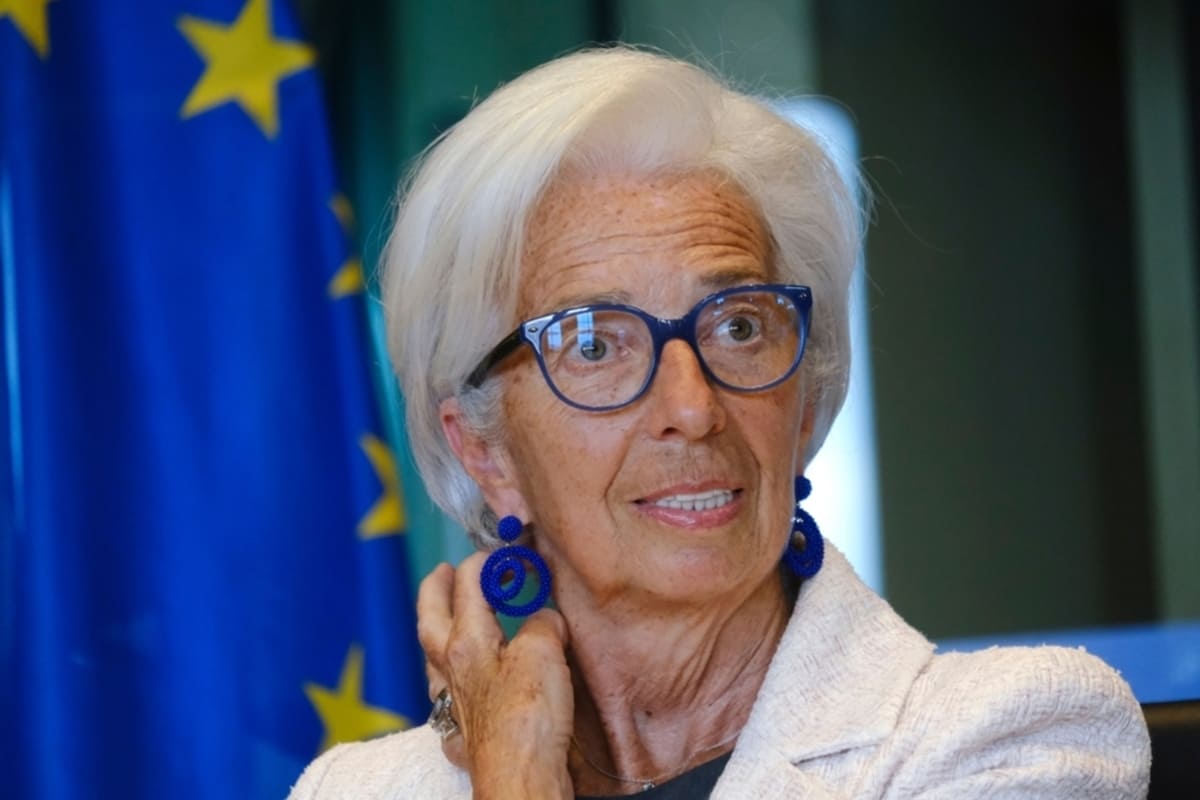
European Central Bank (ECB) President Christine Lagarde stated on Wednesday that even a moderate overshoot of the inflation target caused by the current energy shock could justify a measured tightening of monetary policy. While the ECB maintained interest rates last week, policymakers are actively debating the specific scenarios that would necessitate a rate hike to prevent rapid price growth from becoming entrenched. Lagarde argued in a Frankfurt speech that leaving such an overshoot unaddressed could create a communication risk, as the public might struggle to understand a central bank that fails to react to significant deviations from its target.
Risk scenarios
The ECB has outlined several potential paths for the economy, with Lagarde’s criteria aligning closely with the “adverse” scenario. In the most benign “baseline” case, inflation is expected to average 2.6 percent this year. However, under the “adverse” scenario, inflation could peak above 4 percent in the second half of the year before returning to the 2 percent target by mid-2027. The most “severe” option suggests inflation peaking above 6 percent early next year and remaining above target for several years. Lagarde warned that if inflation is expected to deviate persistently, the response must be appropriately forceful to prevent self-reinforcing mechanisms and the de-anchoring of inflation expectations.
Read more: EU awards $3.1 billion to 54 net-zero projects to avoid 210 million tonnes of CO₂
Watching energy‑driven inflation
The ECB is currently identifying early warning signs that the energy shock is embedding itself into broader economic dynamics, specifically through wage increases or shifting inflation expectations. Chief Economist Philip Lane highlighted that the bank is closely monitoring companies’ price-hike expectations and wages for new hires as key indicators of a war-fueled spike. Financial investors are currently pricing in two to three rate hikes this year, partly due to concerns that the ECB acted too slowly during the inflation surge of 2021-2022. During that period, the bank initially viewed the spike as transitory and did not raise rates until inflation reached approximately 8 percent, which was four times its target.
Cautioning against haste
Despite market pressure for early action, Lagarde argued that the current economic situation differs significantly from the post-pandemic period. She noted that the energy shock is currently smaller, particularly regarding natural gas, and the labor market is not as tight. Furthermore, there is a lack of post-pandemic pent-up demand, fiscal policies are more restrictive, and the central bank’s starting interest rate is already higher. Lane added that financial markets appear to have priced in a “price-level jump” resulting from higher energy costs rather than a persistent, long-term rise in inflation above the 2 percent target.
For more news on economy, click here.