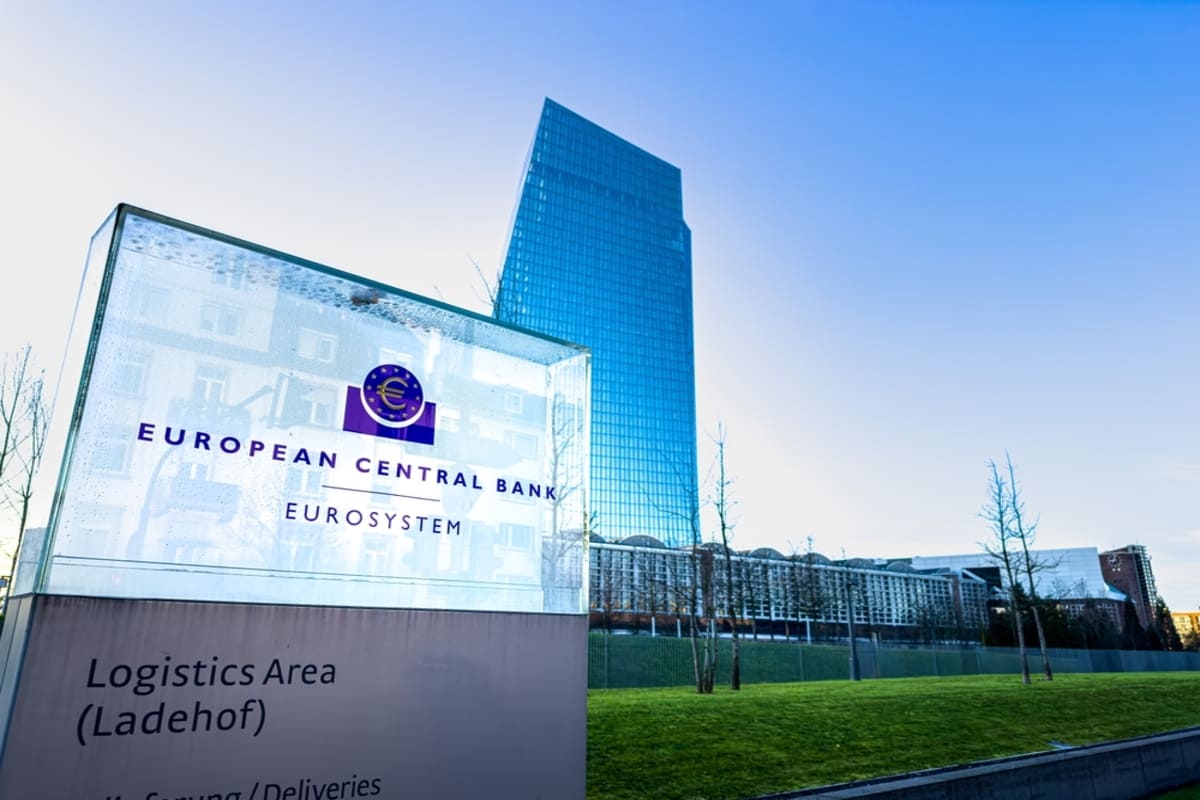
The European Central Bank held interest rates unchanged on Thursday as policymakers assessed volatile energy prices and the still-uncertain inflationary consequences of the conflict in the Middle East.
Following its July 23 meeting, the ECB’s Governing Council kept the deposit facility rate at 2.25 percent, the main refinancing operations rate at 2.40 percent and the marginal lending facility rate at 2.65 percent.
The decision followed a quarter-percentage-point increase in June and reflected the central bank’s determination to evaluate incoming economic information before making another policy adjustment.
According to the ECB’s official monetary policy decision, the outlook for energy prices remained highly volatile. Prices were close to the levels incorporated into the Eurosystem’s June baseline projections but remained substantially above those recorded before the Middle East conflict.
Energy risks persist
The ECB said the full inflationary consequences of the energy shock had not yet become evident. Policymakers will closely monitor the intensity and duration of the disruption, along with its indirect effects on other prices and any second-round impact on wages and inflation expectations.
The central bank reaffirmed its commitment to stabilizing inflation at its 2 percent medium-term target. However, it avoided signaling a predetermined path for borrowing costs and maintained that future decisions would be made individually at each policy meeting.
Its assessment will continue to consider the inflation outlook and surrounding risks, the latest economic and financial data, underlying inflation dynamics and the strength of monetary policy transmission across the euro area.
The decision means borrowing costs for households and businesses will remain at their current levels while the ECB determines whether the energy-driven increase in inflation will prove temporary or become more broadly embedded in the economy.
Higher energy prices can affect inflation directly through household electricity, gas and fuel bills. They can also raise transportation and production costs, eventually feeding into the prices of food, manufactured products and services.
Read more: ECB selects 36 payment providers for 12-month digital euro pilot starting in 2027
Policy options remain
The ECB said its asset purchase program and pandemic emergency purchase program portfolios continued to decline at a measured and predictable pace. The Eurosystem is no longer reinvesting principal payments from securities reaching maturity under either program.
This gradual reduction is shrinking the ECB’s bond holdings and withdrawing some of the monetary support provided during earlier economic crises.
The Governing Council also reiterated that it was prepared to adjust all its instruments within its mandate to ensure inflation stabilizes sustainably at its medium-term target and that monetary policy continues to function smoothly throughout the euro area.
The Transmission Protection Instrument remains available to counter unwarranted and disorderly market movements that could seriously threaten the transmission of monetary policy across individual euro-area countries.
The tool is intended to prevent unjustified differences in financing conditions from undermining the ECB’s ability to implement a single monetary policy across the currency bloc. Its availability gives policymakers an additional safeguard if financial markets respond unevenly to geopolitical, fiscal or economic developments.
Broader policy context
The decision followed the ECB’s June 11 rate increase, when the Governing Council raised all three key interest rates by 25 basis points in response to inflationary pressure generated by the Middle East conflict.
That increase took effect on June 17 and lifted the deposit facility rate from 2 percent to 2.25 percent. The main refinancing rate rose from 2.15 percent to 2.40 percent, while the marginal lending rate increased from 2.40 percent to 2.65 percent.
The July pause therefore gives policymakers more time to evaluate how the June increase is affecting financing conditions and whether further action is needed to prevent higher energy costs from producing persistent inflation.
The latest inflation figures provided some evidence that price pressures were moderating. Eurostat reported that annual euro-area inflation slowed to 2.8 percent in June from 3.2 percent in May. The rate nevertheless remained above the ECB’s 2 percent target and was higher than the 2 percent recorded in June 2025.
Inflation pressures ease
Energy prices remained an important contributor to inflation despite the slowdown. Energy added 0.77 percentage points to the euro area’s annual inflation rate in June, while services contributed 1.51 percentage points.
Food, alcohol and tobacco contributed 0.29 percentage points, and non-energy industrial goods added 0.18 percentage points. Annual energy inflation stood at 8.5 percent in June, compared with 10.8 percent in May, while services inflation reached 3.2 percent.
Core inflation, which excludes energy, food, alcohol and tobacco, was 2.4 percent. This measure is closely monitored because it can provide a clearer indication of whether price pressures are spreading through the domestic economy.
The ECB’s June 2026 economic projections anticipated headline inflation averaging 3 percent in 2026 before easing to 2.3 percent in 2027 and 2 percent in 2028.
Inflation excluding energy and food was projected to average 2.5 percent in both 2026 and 2027 before declining to 2.2 percent in 2028.
Growth outlook tested
Under the baseline projections, euro-area economic growth was expected to reach 0.8 percent in 2026, 1.2 percent in 2027 and 1.5 percent in 2028. The projections assumed that the immediate energy disruption would gradually ease and that its wider economic effects would remain manageable.
However, the ECB also presented a severe scenario illustrating the risks posed by a prolonged conflict and greater energy disruption. Under that scenario, inflation could average 4 percent in 2026, rise to 5.3 percent in 2027 and remain at 3 percent in 2028.
Economic growth would weaken to 0.5 percent in 2026 and 0.4 percent in 2027 before recovering to 1.6 percent in 2028.
The baseline forecast projected headline inflation reaching a quarterly peak of 3.4 percent in the third quarter of 2026, with energy inflation rising as high as 12.5 percent during the same period.
Government measures intended to cushion households and businesses from higher energy costs were expected to reduce energy inflation by approximately 0.6 percentage points on average during 2026.
For more news on economy, click here.