
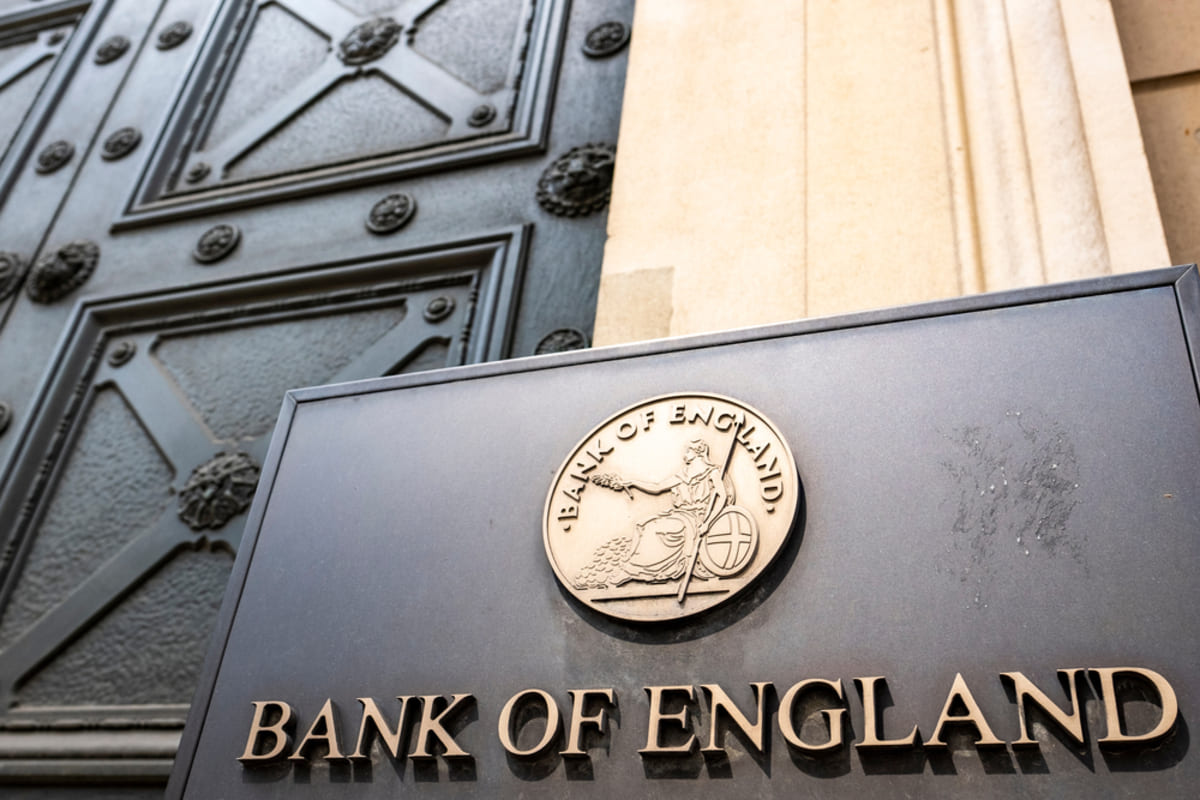
The Bank of England kept borrowing costs unchanged on Thursday, holding Bank Rate at 3.75 percent as policymakers weighed softer current inflation against the possibility of renewed pressure from global energy markets.
The July decision was approved by six members of the nine-member Monetary Policy Committee. Andrew Bailey, Sarah Breeden, Swati Dhingra, Clare Lombardelli, Dave Ramsden and Alan Taylor supported maintaining the rate, while Megan Greene, Catherine L Mann and Huw Pill favored a 0.25 percentage-point increase to 4 percent.
In its social post, the Bank confirmed the 6–3 vote and directed readers to further information about Bank Rate.
The decision preserved the level set in December 2025, when the committee delivered its most recent reduction. It also marked the fourth consecutive meeting at which Bank Rate remained at 3.75 percent, although the balance of votes has shifted toward tighter policy since February.
For the six members supporting no change, the current rate and the tightening in financial conditions since the Middle East conflict provided sufficient protection against inflation risks. They also judged that waiting would preserve the option to respond later as the impact of the energy shock became clearer.
The three members seeking an increase were less confident that domestic price pressures would continue fading. They considered a proactive move necessary to reduce the risk that higher energy costs would become embedded in wages and prices.
The split leaves policy unchanged for a fourth meeting while revealing the strongest support for an increase since the energy shock began influencing the committee’s decisions.
Inflation risks rise
U.K. consumer price inflation fell to 2.6 percent in June, but the committee expects it to rise during the remainder of 2026 as earlier increases in energy costs pass through to household bills and other prices. Motor fuel accounted for 0.6 percentage points of June’s annual inflation rate.
The Bank said crude oil and refined-product prices remained volatile and above their levels before the regional conflict. On July 28, front-month Brent crude stood at $84 a barrel, while UK front-month natural gas traded at 136 pence per therm.
The committee found little evidence so far of substantial second-round effects in wage setting or company pricing. It also saw clear underlying disinflation, supported by spare capacity in the labor market and higher borrowing costs, which are restraining demand and should continue easing price pressure over time.
Even so, policymakers judged the risks around the central inflation forecast to be tilted to the upside. They identified possible pressure from energy markets, food costs associated with El Niño and prices for components linked to artificial intelligence investment.
The committee reiterated that monetary policy is intended to return inflation sustainably to the 2 percent target. It said it remained prepared to adjust Bank Rate if emerging evidence showed that the inflation outlook had changed materially.
The Bank held £491 billion of U.K. government bonds for monetary policy purposes as of July 17. Its next scheduled interest rate decision is due on September 17, giving policymakers another seven weeks of price, labor-market and activity data before deciding whether the current stance remains appropriate.
Forecast paths diverge
In its July report, the Bank’s central projection showed inflation reaching 3.2 percent in the fourth quarter of 2026 before returning to 2 percent during 2027 and ending the forecast period at 1.9 percent in the third quarter of 2029.
The forecast assumes oil prices ease from $76 a barrel in the third quarter of 2026 to about $71 by the end of the projection. U.K. natural gas prices are expected to peak slightly above 123 pence per therm in the fourth quarter before declining to less than 60 pence by the forecast’s end.
Under a milder scenario, with oil and gas prices below the central assumptions and no second-round effects, inflation peaks at 3 percent in late 2026. Annual GDP growth reaches a low of 0.7 percent in the first quarter of 2027 before recovering.
The adverse scenario assumes oil prices 30 percent above the central path and gas prices 60 percent higher. Inflation then peaks at 4.5 percent in the second quarter of 2027 and remains at 2.4 percent at the end of the forecast, while private-sector wage growth reaches 4.4 percent.
The central case anticipates subdued economic growth through 2026 and early 2027, followed by a gradual improvement. Four-quarter GDP growth is projected at 1.6 percent in the third quarter of 2029, while the output gap is estimated at negative 1.3 percent in the fourth quarter of 2026.
Bank simulations indicate that the central and milder paths would broadly support the market-implied rate curve during the first year and lower rates thereafter. The adverse case would require a tighter policy stance to prevent temporary energy pressure from producing more persistent inflation.
Earlier easing cycle
The current pause follows a sequence of decisions that moved from gradual easing toward greater caution. At its December decision, the committee voted 5–4 to reduce Bank Rate by 0.25 percentage points to 3.75 percent. Four members preferred to keep it at 4 percent. That cut brought the cumulative reduction since August 2024 to 1.5 percentage points.
The committee said inflation had reached 3.2 percent, but it expected wage and services inflation to continue easing. It also warned that future decisions would become closer as the rate moved lower. The majority viewed the move as consistent with a continuing, gradual withdrawal of policy restraint.
At the February meeting, members voted 5–4 to leave the rate at 3.75 percent, with the minority favoring another quarter-point cut to 3.5 percent. Inflation was expected to return close to target from April, while pay growth and services inflation were moderating.
The Bank also pointed to subdued economic growth and slack in the labor market. Although most members still considered further reductions likely, the split vote underscored growing disagreement about their timing and scale. No member supported an increase, leaving debate centered on maintaining or extending the easing cycle.
The March meeting produced a unanimous decision to hold at 3.75 percent after the Middle East conflict sharply increased energy prices. Policymakers balanced evidence of domestic disinflation against the risk that the external shock could influence wage bargaining and company pricing. The committee said it would closely monitor energy costs, inflation expectations and signs of second-round effects.
Caution becomes clearer
At the April decision, eight members supported keeping Bank Rate at 3.75 percent, while Pill favored an increase to 4 percent.
The Bank expected inflation to average 3.1 percent in the second quarter and 3.3 percent in the third, reflecting fuel prices and the Ofgem energy cap. It also noted that tighter financial conditions were weighing on demand, creating a reason to avoid an immediate increase while officials assessed how the shock was passing through the economy.
The committee’s June decision maintained the rate by a 7–2 vote, with Greene and Pill supporting a rise to 4 percent. CPI inflation stood at 2.8 percent and was expected to increase again during 2026. Energy prices had declined from levels seen around the previous meeting but remained volatile and above pre-conflict readings. July’s 6–3 result therefore extended the hold while showing that support for higher rates had widened by one member.
For more news on economy, click here.